
How Does a ROPP Capper Form Threads on Aluminum Caps?
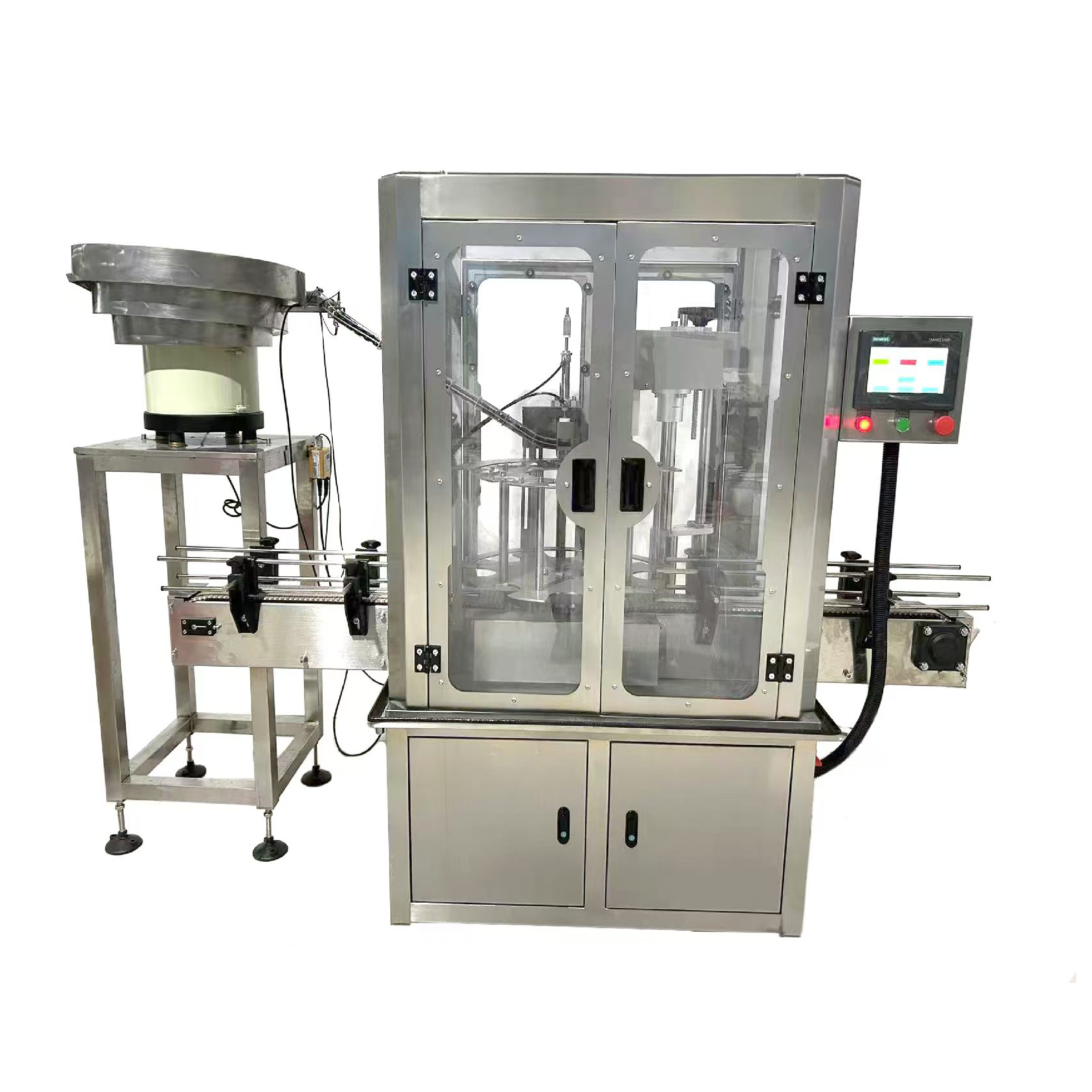
A ROPP capper forms threads on an aluminum cap by pressing and rolling the cap around the threaded neck of a bottle. Unlike a screw capping machine, which tightens a pre-threaded plastic cap, a Roll On Pilfer Proof capping machine uses forming rollers to shape the aluminum cap directly onto the bottle thread.
During the process, an aluminum ROPP cap is first positioned over the bottle neck. The rotary capping head then applies controlled pressure while specialized rollers rotate around the cap. As the rollers move around the bottle neck, they form the aluminum material to match the existing bottle thread and create the required closure profile.
What Happens During the ROPP Thread Forming Process?
The process begins with automatic aluminum cap feeding. A vibratory bowl feeder arranges the ROPP caps in the correct orientation and continuously supplies them to the capping station. The cap is then placed onto the bottle neck before the forming operation starts.
Once the cap is positioned, the rotary capping head applies controlled forming pressure. The rollers progressively press the aluminum skirt against the bottle's threaded neck, creating a matching thread pattern. The aluminum cap is shaped rather than simply screwed onto the bottle, which is why ROPP capping is also called roll-on pilfer-proof capping.
The final closure includes a tamper-evident feature that can indicate whether the bottle has been opened. Correct roller positioning, forming pressure, bottle neck dimensions, cap specifications, and machine speed all influence the quality of the finished aluminum closure.
Why Is Roller Adjustment Important?
The forming rollers must be correctly positioned for the specific bottle neck diameter, thread profile, and aluminum cap dimensions. Excessive forming pressure can damage the cap or affect the bottle neck, while insufficient pressure may produce incomplete threads or an unreliable closure.
A properly adjusted ROPP capper creates consistent thread formation while maintaining the appearance of the aluminum cap. This is especially important for beverage and food manufacturers where both sealing performance and package appearance are production requirements.
How Does an Automatic ROPP Capper Maintain Consistent Aluminum Cap Sealing?
An automatic ROPP capping machine combines cap feeding, bottle positioning, rotary forming, torque adjustment, and inspection into a continuous operation. The automatic vibratory bowl feeder keeps aluminum caps organized, while the rotary capping structure provides stable bottle transfer and cap forming.
The servo torque adjustment system allows operators to configure the capping conditions according to different bottle neck designs and aluminum cap specifications. An automatic inspection function can also detect missing caps or sealing abnormalities, helping reduce packaging errors during continuous production.
Guangzhou Full Harvest Industries Co., Ltd. is a packaging machinery manufacturer providing capping and sealing equipment for food, beverage, and other packaging applications. Its automatic ROPP capping solutions are designed for aluminum closure forming and can be configured according to bottle dimensions, cap specifications, production speed, and sealing requirements.
| Specification | Automatic ROPP Capping Machine |
|---|---|
| Capping Type | Roll On Pilfer Proof |
| Closure | Aluminum ROPP Cap |
| Capping Speed | 20–25 containers/min |
| Container Diameter | 20–50 mm |
| Container Height | 30–250 mm |
| Cap Feeding | Vibratory Bowl Feeder |
| Capping Structure | Rotary |
| Control | Servo Torque Adjustment |
| Inspection | Automatic |
| Safety | Transparent Acrylic Cover |
What Makes ROPP Capping Different from Screw Capping?
The main difference is the closure-forming method. A conventional screw cap normally has a pre-formed internal thread and is tightened by rotating the cap onto a matching bottle thread. A ROPP cap starts as an unthreaded aluminum closure and is mechanically formed around the bottle neck during the capping process.
This makes ROPP capping particularly suitable for compatible aluminum tamper-evident closures used on glass bottles and rigid containers. The finished cap provides a professional appearance while incorporating a tamper-evident connection between the cap and bottle.
Before selecting a ROPP capper, manufacturers should confirm the bottle neck finish, aluminum cap diameter and height, thread specifications, required production speed, and closure design. Matching these specifications ensures that the forming rollers can produce the required aluminum threads consistently.