
How Honey Producers Improve Glass Jar Sealing with an Automatic Vacuum Capping Machine
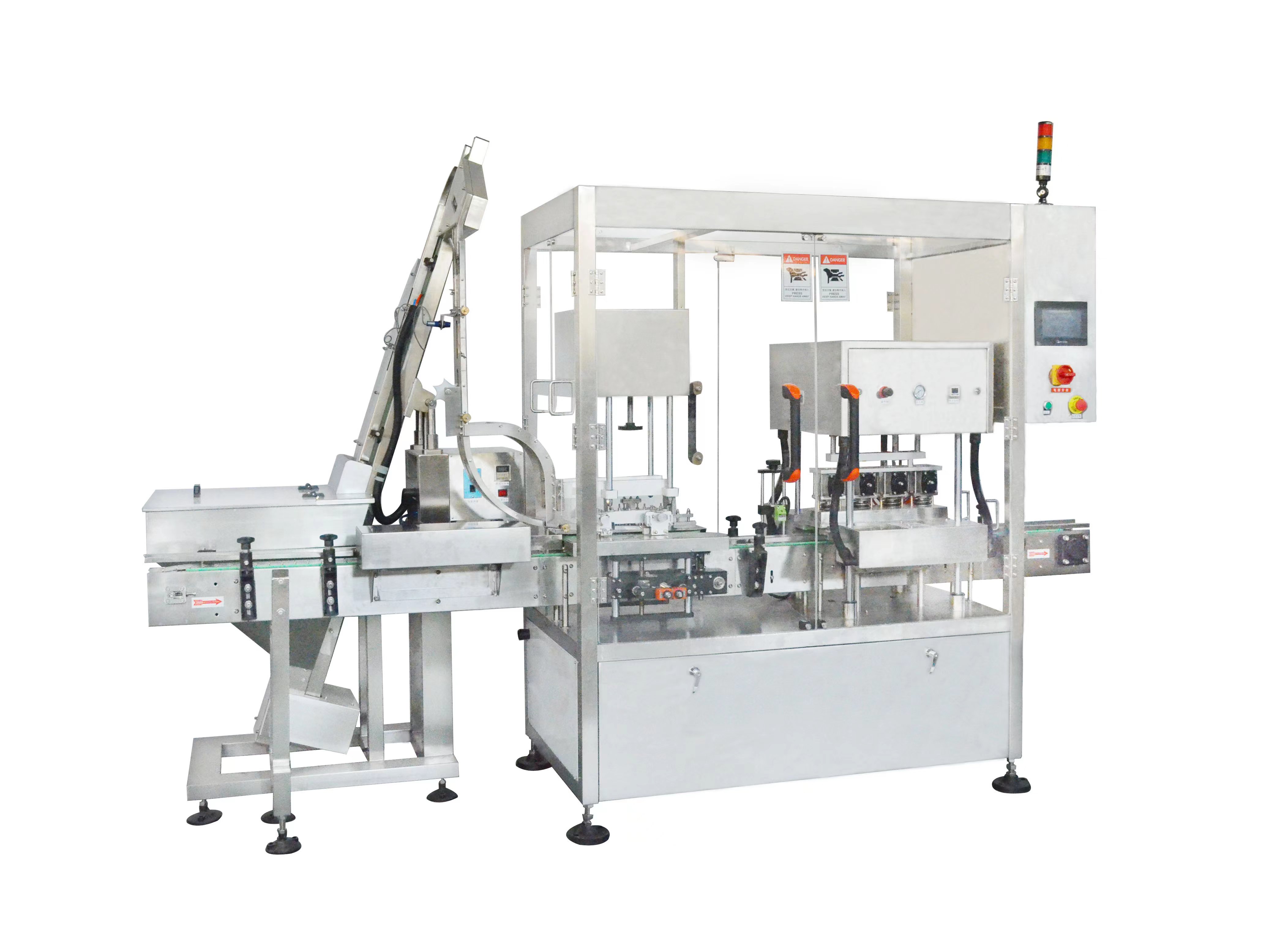
Honey producers commonly use glass jars with twist-off lids because this packaging format provides a practical closure system and presents the product clearly to consumers. After honey is filled into a glass jar, the twist-off lid must be correctly positioned and sealed to reduce the risk of air entering the package. An automatic glass jar vacuum capping machine combines vacuum extraction and lid sealing to create a more controlled and repeatable packaging process.
The Automatic Glass Jar Vacuum Capping Machine with 4 Head is designed for continuous vacuum sealing of glass jars with compatible twist-off lids. Its four-head capping structure supports higher production efficiency, while the automatic cap lifting system continuously supplies lids to the capping station. The machine is suitable for food, beverage, cosmetic, and pharmaceutical manufacturers packaging different jar products.
How Does Vacuum Capping Improve Honey Jar Sealing?
During honey packaging, the filled glass jar is transferred to the capping station and prepared for twist-off lid sealing. The automatic cap lifting system supplies lids to the capping area, where the lid is positioned on the jar. The vacuum capping process then removes air from the jar headspace according to the configured packaging process before the lid is sealed.
Creating a controlled vacuum can help establish the required closure conditions inside the jar. The lid must also be correctly aligned with the jar sealing surface so that the closure forms consistently. If the lid is incorrectly positioned or the jar and lid are not properly matched, the resulting seal may be inconsistent regardless of the capping speed.
For honey producers, the objective is therefore not simply to tighten the lid as quickly as possible. Vacuum extraction, lid positioning, jar condition, twist-off lid compatibility, and sealing parameters all influence the final package. An automatic vacuum capper coordinates these operations to reduce variations associated with manual lid handling and sealing.
Why Is Consistent Sealing Important for Honey Glass Jars?
Honey is commonly packaged in glass jars with twist-off lids, and the closure needs to remain secure during storage, transportation, and handling. A consistent sealing process helps reduce problems associated with incorrectly positioned or insufficiently sealed lids.
Manual capping can introduce variations in lid placement and tightening from one jar to another. An automatic system provides a repeatable process by automatically feeding the lid, positioning the jar, extracting air, and completing the sealing operation. This is particularly useful for honey producers operating continuous production lines.
Why Use a Four-Head Automatic Vacuum Capping Machine for Honey?
The four-head vacuum capping structure allows multiple jars to be processed within the capping cycle, providing higher production efficiency than a single-head configuration. The machine is designed for continuous glass jar sealing and can be configured according to different compatible jar shapes, diameters, and twist-off lid specifications.
The automatic cap lifting system continuously supplies lids to the capping station, reducing the need for manual cap handling. The intelligent automatic processing system integrates jar feeding, vacuum extraction, lid sealing, and product discharge, allowing the machine to operate as part of a continuous honey packaging line.
Guangzhou Full Harvest Industries Co., Ltd. is a packaging machinery manufacturer providing equipment for food, beverage, cosmetic, pharmaceutical, and industrial packaging applications. Its vacuum capping solutions are designed around production requirements such as automatic cap supply, vacuum extraction, controlled lid sealing, flexible container handling, and continuous operation. For honey producers, the four-head automatic vacuum capping machine provides an automated solution for sealing compatible glass jars with twist-off lids.
How Does the Automatic Cap Lifting System Help Honey Producers?
A continuous supply of twist-off lids is important for automated honey packaging. If operators must manually place every lid, production speed can be affected and lid positioning may become inconsistent. The automatic cap lifting mechanism continuously transports lids toward the capping station, reducing repetitive manual handling.
The cap lifting system works together with the vacuum capping heads to maintain a more organized sealing process. When combined with automatic jar feeding and product discharge, it allows the capping operation to become part of a continuous packaging line rather than a separate manual step.
Can the Machine Handle Different Honey Jar Sizes?
The automatic glass jar vacuum capping machine is designed to support different compatible glass jar shapes, diameters, and twist-off lid specifications. The capping heads and machine settings can be customized according to the actual jar dimensions and production requirements.
Before selecting the machine, honey producers should provide the jar diameter, jar height, lid diameter, lid type, jar shape, production speed, and required vacuum conditions. These details help determine the appropriate capping configuration and ensure that the machine is matched to the actual glass jar and twist-off lid.
What Is the Typical Honey Jar Vacuum Capping Process?
A typical automated honey packaging process can be organized as honey filling → jar feeding → twist-off lid supply → lid positioning → vacuum extraction → lid sealing → product discharge → inspection → labeling → secondary packaging.
The exact process can vary according to the honey product, filling method, jar design, lid specification, and production requirements. The four-head vacuum capping system is intended to integrate the critical capping operations into a continuous process, helping honey producers improve production efficiency while maintaining more consistent glass jar sealing.
What Should Honey Producers Check Before Choosing a Vacuum Capper?
The most important selection factors include glass jar dimensions, jar neck and sealing surface, twist-off lid specifications, required vacuum conditions, target production speed, and the number of packaging formats. The machine should be evaluated using actual jars and lids because different closure systems can require different capping configurations.
For honey manufacturers seeking higher production efficiency, the four-head automatic vacuum capping configuration provides multiple sealing heads, automatic cap lifting, intelligent processing control, and customizable capping settings. These features are designed to support continuous twist-off lid sealing for compatible glass jar packaging applications.