
How Lid Diameter Affects Automatic Press Capping Configuration
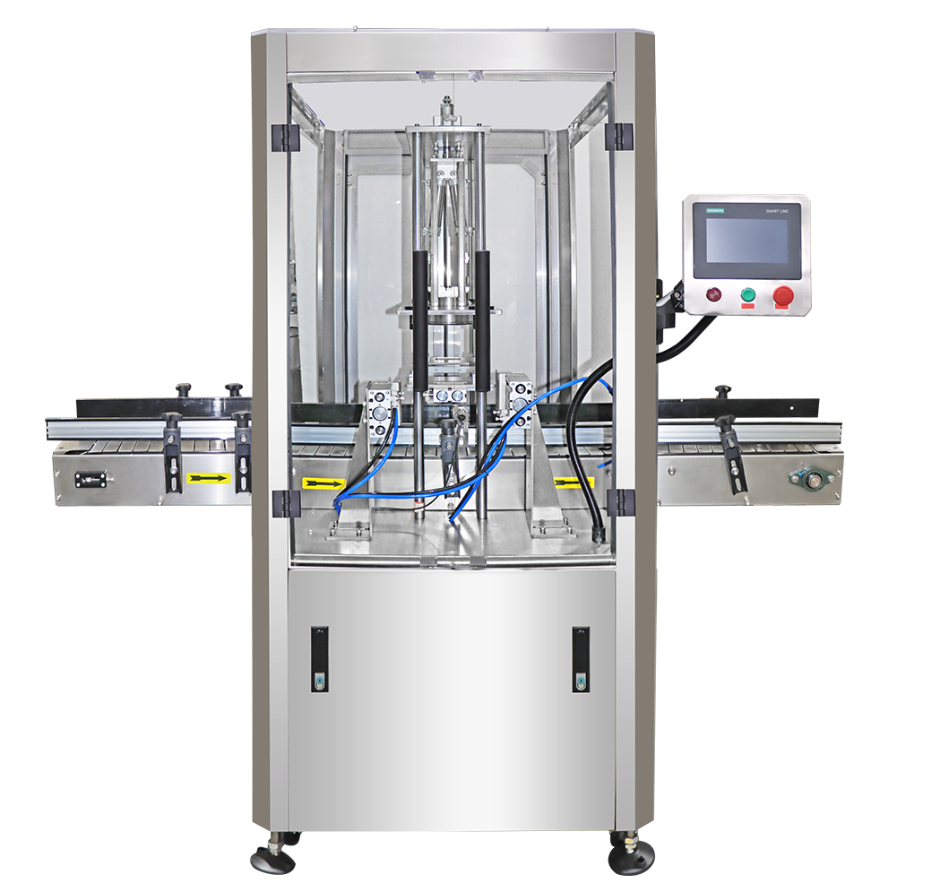
Lid diameter is an important factor when configuring an automatic press capping machine. The diameter determines the size of the pressing head, the contact area between the cap and tooling, the container positioning requirements, and the amount of force that needs to be distributed across the lid.
A press capping machine should therefore be configured according to the actual lid diameter, container opening, cap design, container material, and required pressing force. A suitable configuration helps the lid remain centered during pressing and ensures that the closure is fully seated without unnecessary deformation.
Why Does Lid Diameter Matter in Press Capping?
A larger lid generally provides a larger pressing surface, while a smaller lid requires more precise alignment between the pressing head and container opening. If the pressing head does not match the lid diameter correctly, the pressure may not be distributed evenly across the closure.
The cap locking structure also affects configuration. Snap-on and press-fit lids can have different internal locking features, so the required pressing stroke and force may vary even when two lids have a similar diameter. Container rigidity is another consideration because flexible plastic containers can respond differently to pressing force than rigid containers.
For manufacturers running multiple lid sizes, the machine may require adjustable pressing-head dimensions, container positioning, and pressing height. Testing the actual cap and container combination is the most reliable way to determine the appropriate configuration.
What Happens If the Pressing Head Is Too Large or Too Small?
If the pressing head is too large, it may contact the outer edge of the lid incorrectly or interfere with surrounding container features. If it is too small, the force may be concentrated in a limited area instead of being distributed appropriately across the closure.
Correct tooling should apply pressure to the intended area of the lid while keeping the container accurately centered. This helps achieve consistent cap seating and reduces the risk of damaged or partially installed closures.
How Should an Automatic Press Capper Be Configured for Different Lid Diameters?
The main adjustments typically include pressing-head size, pressing height, container positioning, pressing force, and operating speed. Smaller lids may require more precise positioning, while larger closures may require tooling designed to distribute force across a wider contact area.
Guangzhou Full Harvest Industries Co., Ltd. is a packaging machinery manufacturer providing automatic capping equipment for food, beverage, and other packaging applications. Its press capping solutions can be configured according to container dimensions, lid diameter, closure structure, and production requirements.
| Configuration Factor | Effect of Lid Diameter |
|---|---|
| Pressing Head | Must match the lid contact area |
| Container Positioning | Keeps the lid centered |
| Pressing Height | Determines final cap seating |
| Press Force | Must suit cap and container structure |
| Capping Speed | Should remain stable for the selected format |
| Tooling | May require different sizes for different lids |
For production lines handling several lid diameters, manufacturers should consider how quickly the machine can be adjusted between formats. A practical changeover normally involves replacing or adjusting the relevant tooling and then verifying pressing height, force, and container alignment.
Before ordering an automatic press capping machine, manufacturers should provide lid samples, container samples, lid diameter, container diameter, cap material, closure design, and target production speed. This information allows the machine configuration to be matched to the actual packaging system and helps achieve reliable press capping performance.