
How Snack Manufacturers Seal Plastic Food Containers with an Automatic Press Capping Machine
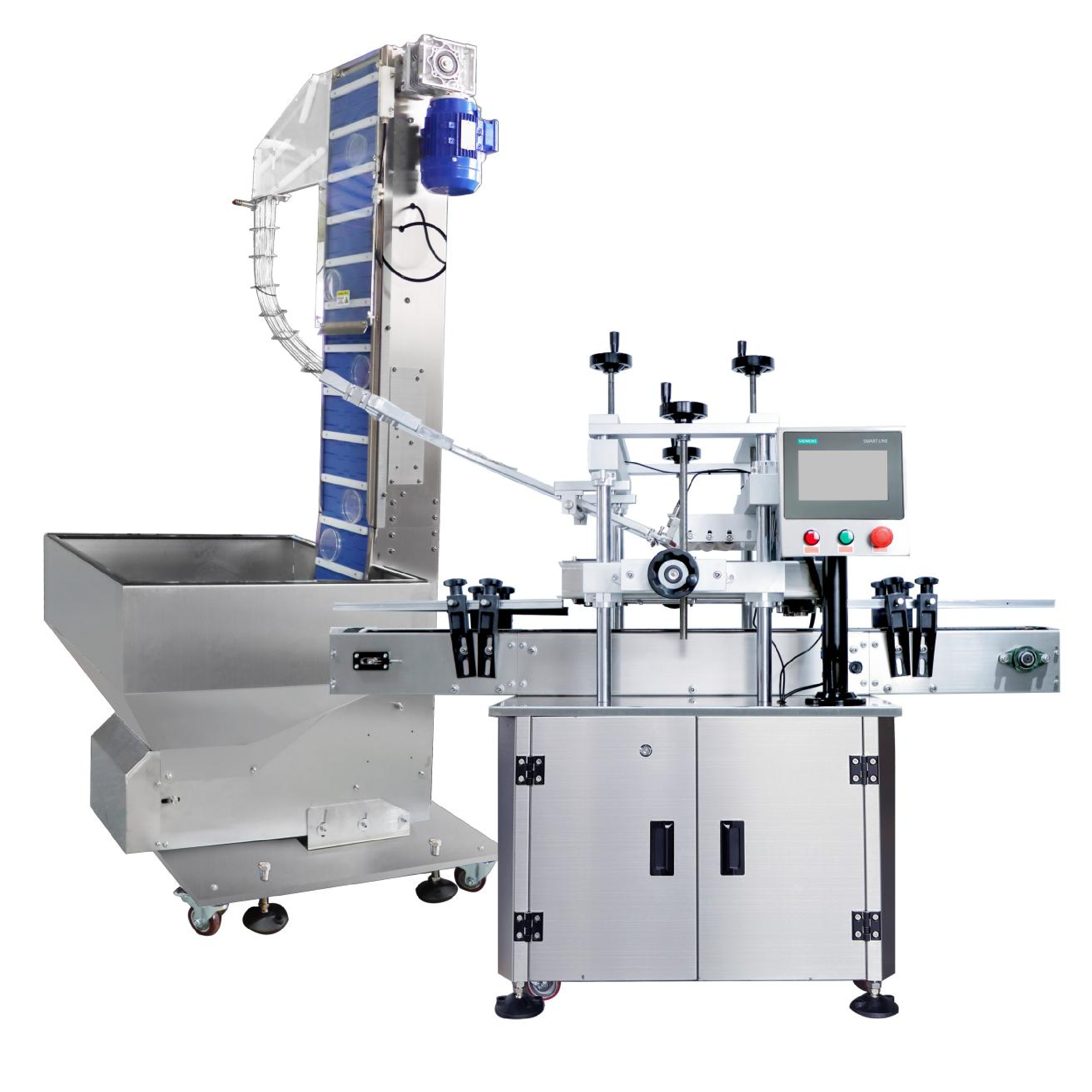
Snack manufacturers often package products such as nuts, dried fruit, cookies, candy, crackers, and other ready-to-eat snacks in plastic food containers with snap-on or press-fit lids. After filling, the lid must be pressed firmly onto the container to engage the locking structure and create a secure closure. An automatic press capping machine performs this operation continuously and consistently, reducing the need for manual lid pressing.
For high-volume snack packaging, consistent lid placement is important for protecting the product during handling, transportation, and storage. The capping process must apply sufficient downward force to fully seat the lid without deforming the plastic container or damaging the closure.
How Does Press Capping Work for Plastic Snack Containers?
After the snack product is filled into the plastic container, containers are transferred to the capping station. The lid is positioned on the container opening and the automatic press capping head moves downward to apply controlled pressure. This pressing action pushes the lid into its locking position, allowing the cap to engage with the corresponding structure on the container.
The required pressing conditions depend on the container material, lid design, container diameter, cap dimensions, and locking structure. PET, PP, and other plastic containers can have different levels of rigidity, while snap-on lids may require different pressing forces. Correct machine adjustment helps ensure that each lid is fully seated without excessive pressure.
For snack manufacturers producing different container formats, adjustable bottle or container positioning and quick format changes can make the production process more flexible. Automatic operation also reduces repetitive manual capping and provides more consistent results across large production batches.
What Problems Can Incorrect Press Force Cause?
If the pressing force is too low, the lid may remain partially attached or fail to engage completely with the container. This can create loose closures and inconsistent package appearance. If the force is too high, flexible plastic containers or lids may become deformed.
The correct setting should therefore be determined through testing with the actual snack container and lid combination. Operators can adjust the pressing force and pressing height until the lid is completely seated while maintaining the original shape of the container and closure.
Why Is an Automatic Press Capping Machine Suitable for Snack Packaging?
Snack production often requires fast and repeatable packaging operations. An automatic press capping machine can integrate container positioning, lid placement, pressing, and product discharge into a continuous process. This helps reduce manual intervention and supports stable production rates.
Guangzhou Full Harvest Industries Co., Ltd. is a packaging machinery manufacturer serving food and beverage manufacturers with automatic capping and packaging equipment. Its press capping solutions can be configured according to container dimensions, closure specifications, pressing requirements, and production capacity, making them suitable for different plastic food container applications.
A typical snack packaging process can follow snack filling → container feeding → lid placement → automatic press capping → closure inspection → labeling → secondary packaging. The exact configuration depends on the snack product, container design, lid type, and required production capacity.
| Packaging Factor | Recommended Consideration |
|---|---|
| Snack Product | Nuts, dried fruit, cookies, candy, crackers |
| Container | Compatible plastic food container |
| Lid Type | Snap-On / Press-Fit Lid |
| Capping Method | Downward Pressing |
| Press Force | Adjusted to cap and container |
| Container Material | PET, PP, and other compatible plastics |
| Production | Continuous Automatic Capping |
How Can Snack Producers Improve Capping Consistency?
The most effective approach is to keep the container, lid, and press capping parameters properly matched. Consistent lid supply and accurate container positioning help ensure that the pressing head contacts the lid at the correct position during every cycle.
Before production, manufacturers should provide actual container and lid samples so the machine configuration can be tested. Press force, pressing height, container positioning, and production speed can then be adjusted to achieve stable cap placement while minimizing deformation and capping errors.
For snack manufacturers using multiple plastic food container sizes, an adjustable automatic press capping machine can provide a practical solution for maintaining consistent snap-on lid application while supporting flexible packaging production.