
How to Adjust Press Force on an Automatic Press Capping Machine
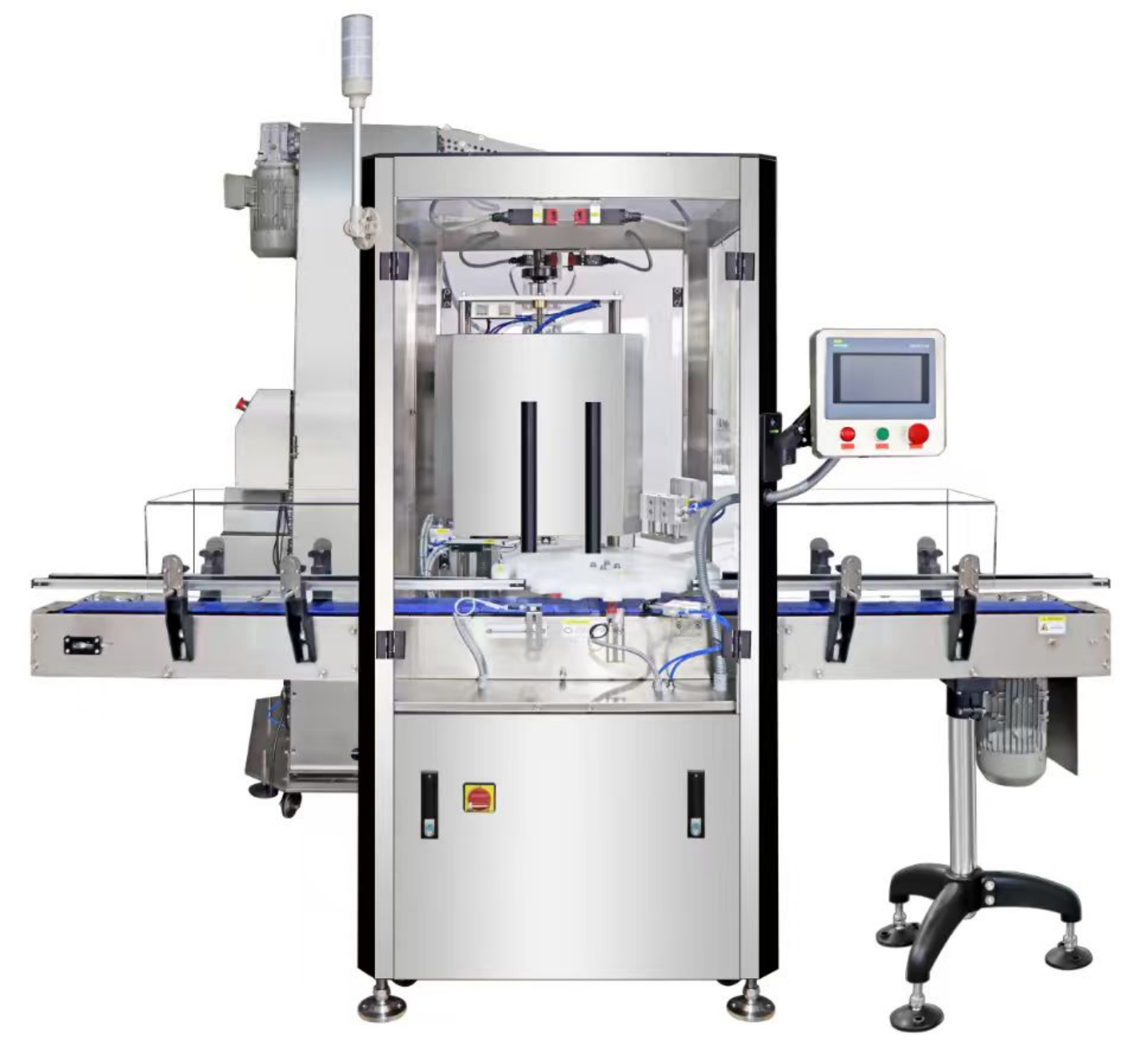
The press force on an automatic press capping machine should be adjusted according to the cap design, bottle neck dimensions, closure material, and required locking force. The correct force allows a snap-on or press-fit cap to seat completely without damaging the cap, bottle, or container neck.
Too little press force can result in caps that are not fully seated, while excessive force may deform plastic caps, damage bottle necks, or affect the appearance of the finished package. The goal is to find a stable pressing force that provides secure cap placement while maintaining consistent production.
What Factors Determine the Correct Press Force?
The first factors to check are cap material, cap diameter, bottle neck size, cap locking structure, and bottle material. A flexible plastic cap may require a different pressing force from a rigid closure, while different snap-fit designs can have different locking resistance.
Production speed also matters. At higher speeds, the pressing head must complete the capping movement consistently within a shorter cycle. The press capping machine should therefore be tested with the actual bottle and cap combination to determine the appropriate pressure, pressing height, and operating speed.
A practical adjustment process is to start with a moderate force and gradually increase it until the cap is fully seated. After adjustment, operators should inspect the cap position and check that there is no visible deformation or damage. The same setting should then be verified across multiple containers to confirm consistent results.
How Do You Adjust Press Force for Stable Capping?
An automatic press capping machine normally allows adjustment of the pressing height, pressing force, and capping position according to the machine configuration. The bottle should first be correctly positioned under the pressing head so that the force is applied vertically and evenly to the cap.
If the cap remains partially seated, the pressing force or pressing stroke may need to be increased. If the cap becomes deformed or the bottle shows excessive stress, the force should be reduced and the pressing position checked. Correct alignment is just as important as pressure because an off-center pressing head can produce inconsistent cap placement even when the force is appropriate.
Guangzhou Full Harvest Industries Co., Ltd. is a packaging machinery manufacturer providing automatic capping equipment for food, beverage, and other packaging applications. Its press capping machines can be configured according to bottle dimensions, cap specifications, and production requirements, allowing manufacturers to optimize the pressing process for different compatible closure formats.
| Adjustment Factor | Purpose |
|---|---|
| Press Force | Ensures the cap is fully seated |
| Pressing Height | Controls the final cap position |
| Bottle Position | Keeps force centered |
| Cap Specification | Determines required pressing conditions |
| Production Speed | Ensures stable operation at target output |
Before production, manufacturers should test the machine using actual bottle and cap samples. This allows the pressing force, stroke, bottle positioning, and operating speed to be adjusted together rather than relying on a standard setting. Proper adjustment helps achieve secure cap placement while reducing cap damage, bottle deformation, and inconsistent sealing results.