
How to Adjust ROPP Capping Pressure for Different Bottles
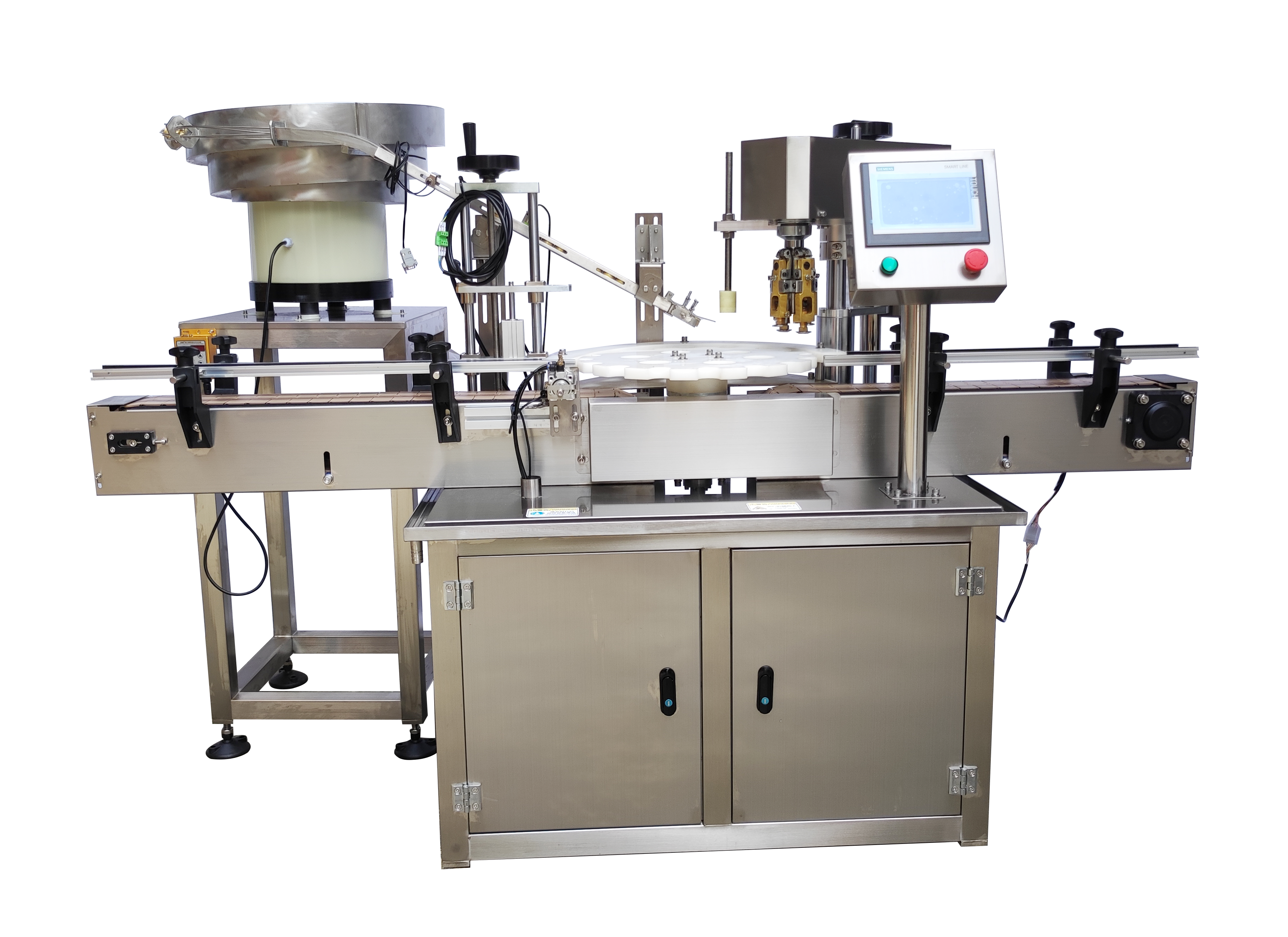
ROPP capping pressure should be adjusted according to the bottle neck finish, aluminum cap specification, thread profile, and bottle material. A glass bottle with a rigid neck can require different forming conditions from another bottle with a different neck diameter or thread design. The objective is to form the aluminum ROPP cap accurately around the bottle thread without damaging the closure or bottle neck.
The correct pressure is not determined by bottle diameter alone. Cap thickness, cap height, bottle neck dimensions, thread profile, and required tamper-evident closure all affect the forming process. Using the correct combination of roller position and forming pressure helps produce uniform threads and stable aluminum cap sealing.
Which Factors Determine ROPP Capping Pressure?
The most important factor is the bottle neck finish. The forming rollers need to press the aluminum cap against the correct areas of the neck so that the cap follows the existing thread profile. If the bottle neck is larger or has a different thread design, the roller position and forming conditions may need to be changed.
The aluminum cap itself also affects the required pressure. Different cap diameters, heights, and material thicknesses can respond differently to roller pressure. Excessive pressure may deform the cap or create an unsuitable closure, while insufficient pressure can result in incomplete thread formation.
Before changing production formats, manufacturers should check the bottle neck diameter, cap dimensions, thread specifications, bottle material, and required closure performance. Testing the actual bottle and aluminum cap is the safest way to determine the appropriate ROPP capping parameters.
What Happens If ROPP Pressure Is Too High or Too Low?
If the forming pressure is too low, the aluminum cap may not fully follow the bottle thread, potentially resulting in incomplete thread formation or an inconsistent tamper-evident closure. If the pressure is too high, the cap may become excessively deformed and unnecessary stress can be transferred to the bottle neck.
A properly adjusted ROPP capper should form the aluminum closure smoothly while maintaining the intended cap shape and bottle-neck integrity. Pressure should therefore be increased or decreased gradually during machine testing rather than changed significantly in a single adjustment.
How Does an Automatic ROPP Capping Machine Adjust to Different Bottles?
An automatic ROPP bottle capping machine uses precision bottle positioning, servo-controlled forming, and adjustable capping parameters to accommodate different compatible bottle formats. The bottle must remain accurately positioned while the forming rollers shape the aluminum cap around the neck.
The Automatic ROPP Bottle Capping Machine from Guangzhou Full Harvest Industries Co., Ltd. uses a servo-controlled capping system designed to provide precise control of rolling pressure and capping parameters. Its automatic cap feeder continuously supplies aluminum ROPP caps, while the bottle positioning structure keeps containers stable during the forming process.
| Parameter | Automatic ROPP Bottle Capping Machine |
|---|---|
| Capping Method | Roll On Pilfer Proof |
| Cap Type | Aluminum ROPP Cap |
| Capping Speed | 20–25 containers/min |
| Bottle Diameter | 20–50 mm |
| Bottle Height | 30–250 mm |
| Pressure Control | Servo Controlled |
| Cap Feeding | Vibratory Bowl Feeder |
| Bottle Positioning | Precision Positioning |
| Control | PLC |
| Detection | Automatic Cap Detection |
How Should Pressure Be Adjusted During Machine Testing?
Start with the machine settings recommended for the specific bottle and cap combination, then run a small number of containers. Inspect the formed aluminum thread, cap appearance, bottle neck, and tamper-evident section. If the thread is incomplete, the forming conditions may need to be increased or the roller position corrected.
If the cap shows excessive deformation, the forming pressure should be reduced and the roller alignment checked. Pressure adjustment should always be combined with correct bottle positioning and roller alignment, because increasing pressure cannot compensate for an incorrectly positioned bottle or unsuitable tooling.
Guangzhou Full Harvest Industries Co., Ltd. provides automatic ROPP capping equipment for food and beverage manufacturers requiring aluminum cap forming and tamper-evident sealing. The machine can be configured according to the customer's bottle neck, aluminum cap specifications, production speed, and closure requirements, with actual bottle and cap samples recommended for configuration verification.