
How to Adjust ROPP Capping Pressure for Different Containers
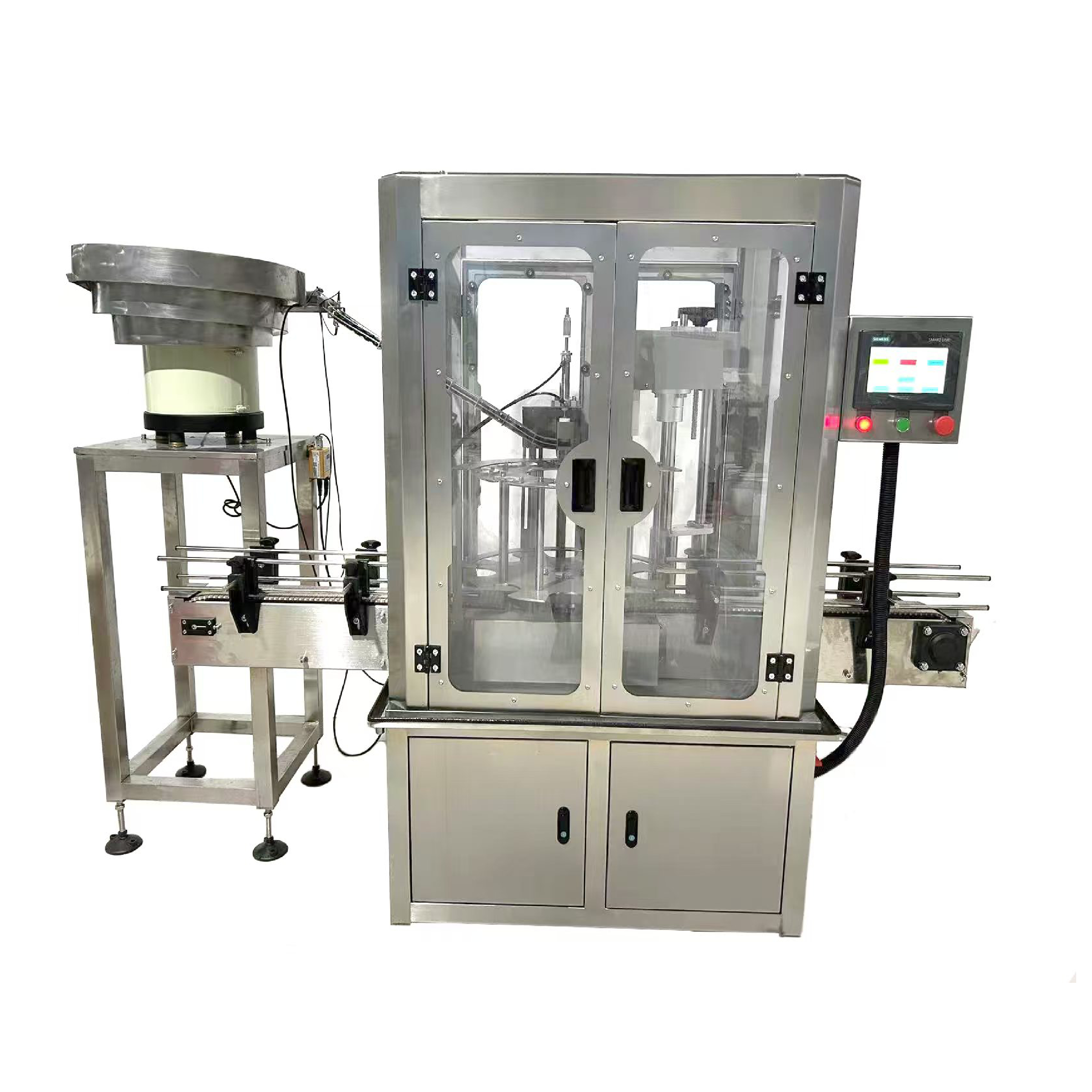
ROPP capping pressure should be adjusted according to the container neck finish, cap specifications, material properties, and required sealing performance. A rigid glass bottle, ceramic container, or other compatible rigid package may respond differently to the rolling pressure applied to an aluminum ROPP cap.
The purpose of pressure adjustment is to form the aluminum cap evenly around the container neck without causing excessive deformation. Correct pressure, roller position, and bottle alignment work together to create a consistent threaded closure and reliable tamper-evident seal.
What Determines the Correct ROPP Capping Pressure?
The container neck finish is one of the most important factors. Different neck diameters and thread profiles require different roller positions and forming conditions. The aluminum cap must be pressed against the correct part of the neck so that its skirt follows the existing thread accurately.
Container material also matters. Glass and ceramic containers are rigid, while other rigid packaging materials can have different mechanical characteristics. The cap diameter, cap height, aluminum thickness, and thread design must also be considered when determining the appropriate rolling pressure.
A useful adjustment approach is to start with a moderate setting and inspect the formed cap after a short production run. The thread should be clearly formed, the cap should remain properly aligned, and there should be no excessive deformation around the closure.
What Happens When ROPP Pressure Is Incorrect?
Insufficient pressure may produce incomplete or weak thread formation because the aluminum cap does not conform properly to the container neck. This can affect closure consistency and the tamper-evident function.
Excessive pressure can deform the aluminum cap, affect its appearance, or place unnecessary stress on the container neck. Increasing pressure is therefore not always the solution to poor sealing. Roller alignment, cap dimensions, and container positioning should also be checked.
How Can One ROPP Machine Handle Different Containers?
When changing container formats, operators normally adjust the roller position, bottle positioning, sealing pressure, and relevant machine parameters. The goal is to keep the container centered while allowing the forming rollers to contact the aluminum cap at the correct height and angle.
For semi-automatic applications, the operator manually places the container while the machine performs the rolling operation. For automatic production, bottle positioning and cap feeding can be integrated into the capping cycle. In both cases, actual container and cap samples should be used to verify the settings.
Guangzhou Full Harvest Industries Co., Ltd. is a packaging machinery manufacturer providing ROPP capping and aluminum cap sealing equipment for food, beverage, and other rigid-container applications. Its ROPP capping machines can be configured according to container dimensions, aluminum cap specifications, production speed, and required closure performance.
| Adjustment Factor | Effect on ROPP Capping |
|---|---|
| Container Neck Diameter | Determines roller positioning |
| Thread Profile | Determines forming path |
| Aluminum Cap Diameter | Affects cap coverage |
| Cap Thickness | Influences required forming pressure |
| Container Material | Affects mechanical response |
| Roller Position | Controls thread formation |
| Capping Pressure | Controls aluminum forming |
| Bottle Alignment | Maintains consistent sealing |
How Should Pressure Be Tested for a New Container?
When introducing a new container, first verify the container diameter, height, neck finish, thread profile, cap diameter, cap height, and aluminum thickness. The machine should then be adjusted and tested with a small batch before full-scale production.
After capping, inspect the aluminum cap for uniform thread formation, proper positioning, acceptable appearance, and tamper-evident performance. If the cap is incomplete, the pressure or roller position may need adjustment. If the cap is excessively deformed, reduce the forming pressure and check the alignment.
For manufacturers using several container formats, recording the validated pressure and roller settings for each bottle-and-cap combination can make future changeovers faster and more consistent. This approach helps maintain stable ROPP sealing without relying on a single pressure setting for every container.