
How Wine Producers Use ROPP Capping for Aluminum Screw Caps
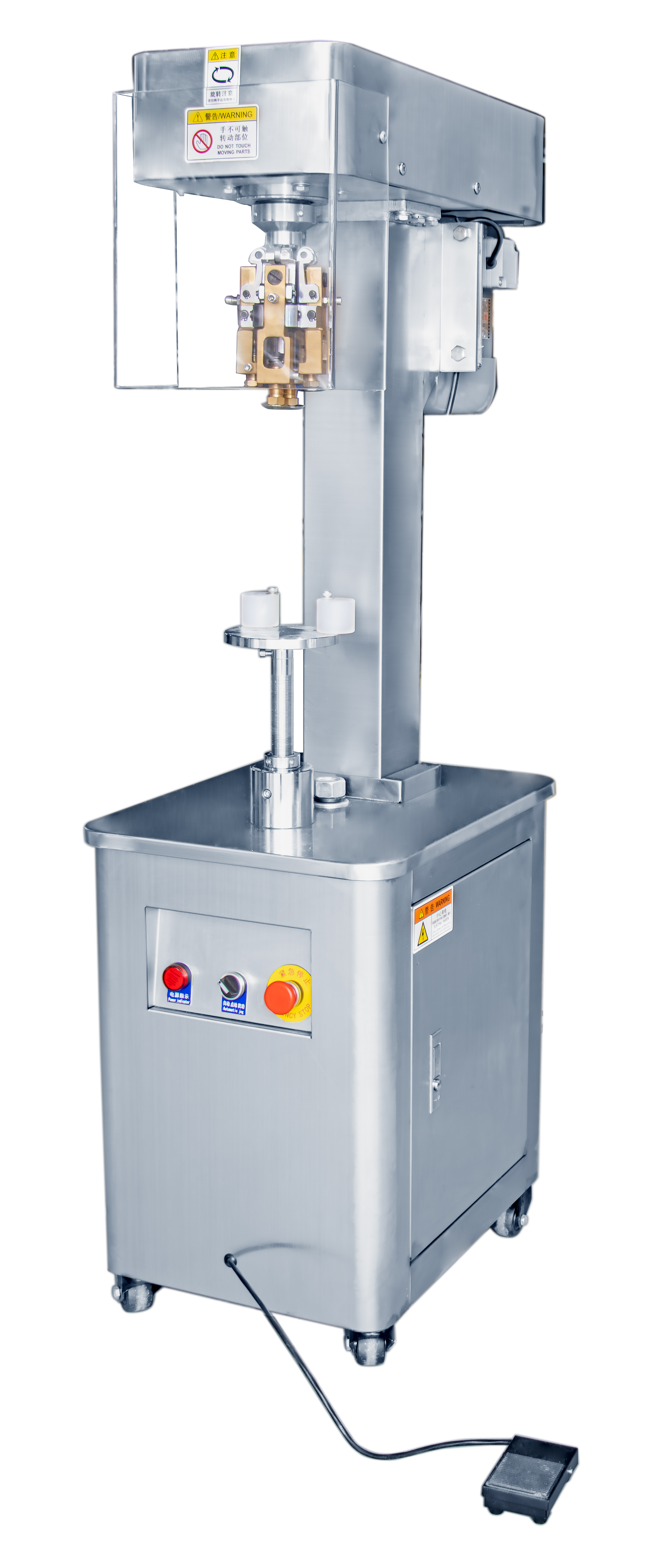
Wine producers use ROPP capping to apply aluminum Roll On Pilfer Proof caps to compatible glass wine bottles. Unlike conventional plastic screw caps that already contain threads, an aluminum ROPP cap is formed directly around the threaded bottle neck during the capping process. The result is a clean aluminum closure with a tamper-evident feature.
For small and medium-sized wineries, a Semi Automatic ROPP Capping Machine can provide an economical way to automate aluminum cap sealing. The operator manually places the wine bottle and aluminum cap into the capping position, while the machine automatically performs the rolling and forming operation. This reduces repetitive manual work while avoiding the complexity of a fully automatic production line.
How Does ROPP Capping Work on Wine Bottles?
After filling the wine bottle, the operator places the aluminum ROPP cap over the bottle neck and positions the bottle in the machine. The bottle holding structure keeps the container stable while precision rolling heads move around the cap. Controlled pressure forms the aluminum material against the bottle's existing thread profile.
The rolling process creates the required aluminum screw thread and tamper-evident closure without requiring a pre-threaded aluminum cap. Correct roller position and sealing pressure are important because different bottle neck finishes and cap specifications may require different forming conditions.
For wine packaging, cap appearance is also an important consideration. A properly adjusted ROPP capping machine can form the aluminum cap evenly around the neck while maintaining a clean and professional finish. The final closure should be checked for thread formation, cap alignment, deformation, and tamper-evident performance.
Why Are Aluminum ROPP Caps Used for Wine Packaging?
Aluminum ROPP closures provide a combination of tamper evidence, clean appearance, and reliable bottle-neck sealing. They are particularly suitable for rigid glass bottles with compatible threaded neck finishes and are commonly associated with wine and other beverage packaging applications.
The closure system must be matched to the specific bottle neck and cap dimensions. Bottle neck diameter, thread profile, aluminum cap size, and cap material can all influence the rolling process.
Why Choose a Semi Automatic ROPP Capping Machine for a Winery?
A semi automatic machine is suitable when a winery has moderate production requirements but still wants consistent aluminum cap forming. The Semi Automatic ROPP Capping Machine operates at approximately 15–20 containers per minute, with a stated container diameter range of 12–60 mm and container height range of 60–350 mm.
The machine combines manual bottle loading with automatic aluminum cap rolling. Its adjustable sealing pressure and rolling position allow the capping process to be configured for different compatible bottle sizes and ROPP cap specifications. The compact design also makes it practical for smaller production areas where floor space is limited.
Guangzhou Full Harvest Industries Co., Ltd. is a packaging machinery manufacturer providing capping and sealing equipment for food, beverage, and other rigid-container applications. Its semi automatic ROPP capping equipment is designed for manufacturers that need controlled aluminum cap forming without investing in a fully automated packaging line.
| Specification | Semi Automatic ROPP Capping Machine |
|---|---|
| Capping Method | Roll On Pilfer Proof |
| Closure | Aluminum ROPP Cap |
| Capping Speed | 15–20 containers/min |
| Container Diameter | 12–60 mm |
| Container Height | 60–350 mm |
| Bottle Loading | Manual |
| Capping Operation | Automatic |
| Pressure Adjustment | Adjustable |
| Rolling Position | Adjustable |
| Compatible Containers | Glass, Ceramic & Rigid Containers |
What Should Wine Producers Check Before Using ROPP Capping?
Wine producers should confirm the bottle neck finish, aluminum cap diameter, cap height, thread profile, bottle dimensions, and required production speed before selecting a ROPP capping machine. These specifications determine whether the rolling heads can form the cap correctly.
Actual wine bottles and ROPP caps should ideally be tested before production. The sealing pressure, rolling position, bottle holding structure, and machine settings can then be adjusted to achieve consistent thread formation without excessive cap deformation.
The typical process can be arranged as wine filling → bottle preparation → aluminum ROPP cap placement → bottle positioning → automatic cap rolling → tamper-evident inspection → labeling → packaging. For small and medium wineries, this semi automatic workflow provides a practical balance between manual flexibility and automated aluminum cap sealing.