
Screw Capping Machine vs Vacuum Capping Machine: Which Is Better for Food Packaging?
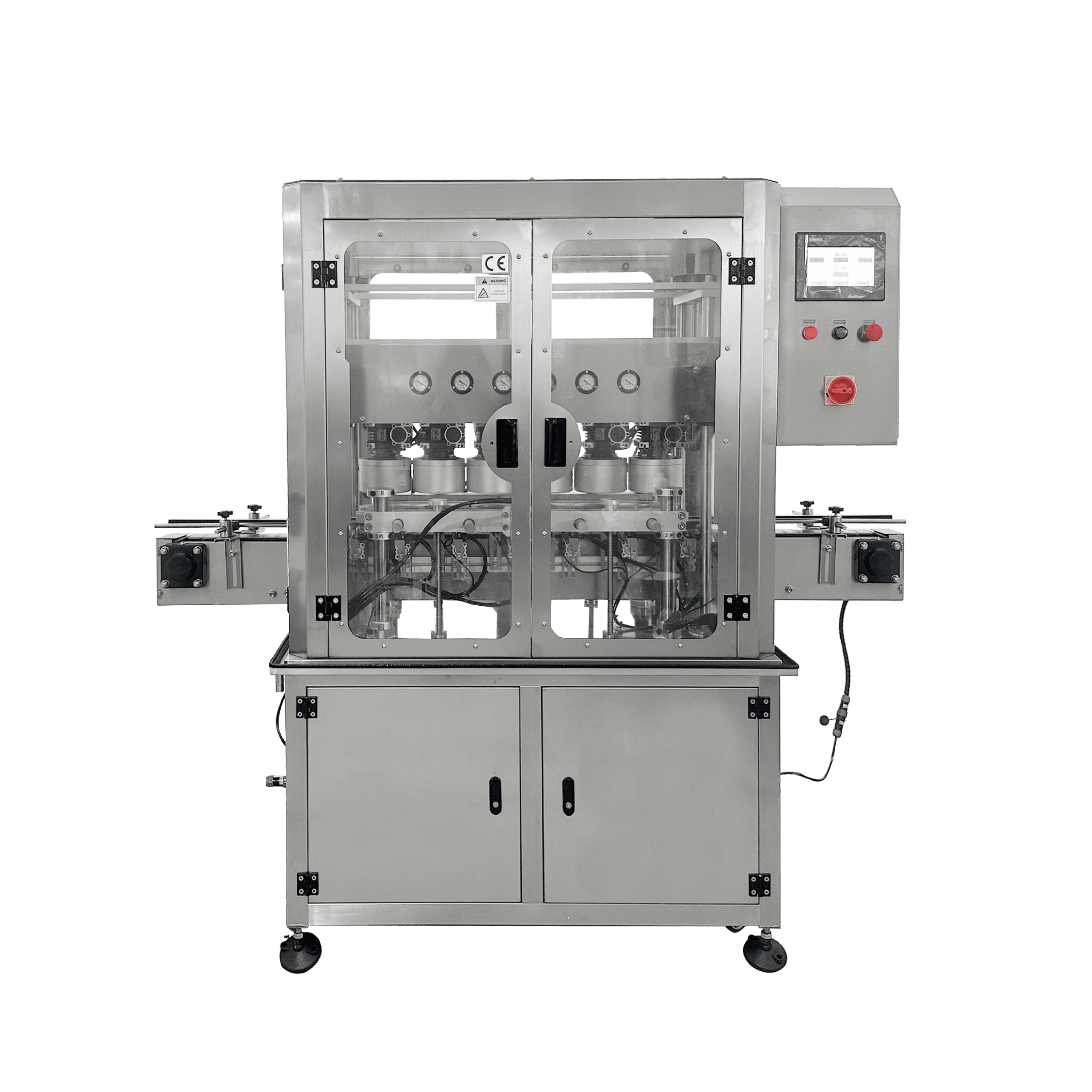
For food packaging, neither a screw capping machine nor a vacuum capping machine is universally better. The right choice depends on the food product, container type, closure design, vacuum requirement, shelf-life objective, and production process.
A screw capping machine is primarily designed to tighten pre-threaded caps onto compatible containers. A vacuum capping machine combines cap tightening with vacuum creation, making it particularly suitable for products packaged in glass jars where reducing the air inside the container is part of the packaging process.
Screw Capping or Vacuum Capping: What Is the Difference?
A screw capping machine places and tightens a pre-threaded cap by rotating it onto the bottle or container neck. Servo or mechanical torque control can be used to achieve consistent tightening force. This makes screw capping suitable for PET bottles, HDPE containers, glass bottles, and other packages using compatible threaded closures.
A vacuum capping machine removes air from the container or headspace during the capping process before or while the twist-off lid is secured. This creates a vacuum inside compatible jars and can help provide the desired vacuum-sealed package. It is commonly associated with glass jars using lug or twist-off lids for food products such as sauces, jams, pickles, honey, and other preserved foods.
| Factor | Screw Capping Machine | Vacuum Capping Machine |
|---|---|---|
| Main Function | Tightens threaded caps | Creates vacuum and seals lids |
| Typical Closure | Screw Cap | Lug / Twist-Off Lid |
| Common Containers | PET, HDPE, Glass | Glass Jars |
| Vacuum Creation | Normally No | Yes |
| Main Control | Capping Torque | Vacuum & Capping Parameters |
| Typical Applications | Bottled Food & Beverage | Jarred Food Products |
The closure itself is an important selection factor. A screw capping machine cannot replace a vacuum capper simply because both machines tighten a lid. The container and closure must be designed for the corresponding sealing method.
Which Machine Is Better for Different Food Products?
For bottled sauces, beverages, edible oils, liquid foods, and other products using threaded screw caps, an automatic screw capping machine can provide fast and consistent cap tightening. It is especially practical when the primary requirement is reliable closure torque and continuous bottle production.
For jams, honey, pickles, sauces, vegetables, fruit products, and other foods packaged in glass jars with twist-off lids, a vacuum capping machine can be more appropriate. The vacuum process can reduce air in the jar headspace while the lid is sealed, supporting the required vacuum packaging process.
Food manufacturers should therefore select the machine based on the packaging objective rather than machine speed alone. If the requirement is simply to tighten a threaded closure, screw capping is usually sufficient. If the package requires a controlled vacuum inside a compatible glass jar, vacuum capping is the more suitable technology.
How Does Production Configuration Affect the Choice?
Production capacity, container dimensions, closure specifications, and automation level also influence machine selection. A high-volume bottle line may use multi-head screw capping equipment, while a glass jar production line may require single-head, double-head, four-head, or higher-capacity vacuum capping configurations.
Guangzhou Full Harvest Industries Co., Ltd. is a packaging machinery manufacturer providing automatic screw capping machines and vacuum capping machines for food and beverage packaging applications. The factory can configure equipment according to container size, cap type, required production speed, vacuum requirements, and overall packaging-line requirements.
What Should Food Manufacturers Check Before Buying?
Before choosing between the two technologies, manufacturers should confirm product type, container material, container dimensions, closure type, cap diameter, sealing requirements, target production speed, and whether vacuum packaging is required.
Actual bottles, jars, caps, and lids should ideally be tested before final machine selection. This allows the appropriate capping head, torque or vacuum settings, container positioning system, and production configuration to be verified for the specific food packaging application.