
Why Does a Vacuum-Capped Jar Lose Its Vacuum?
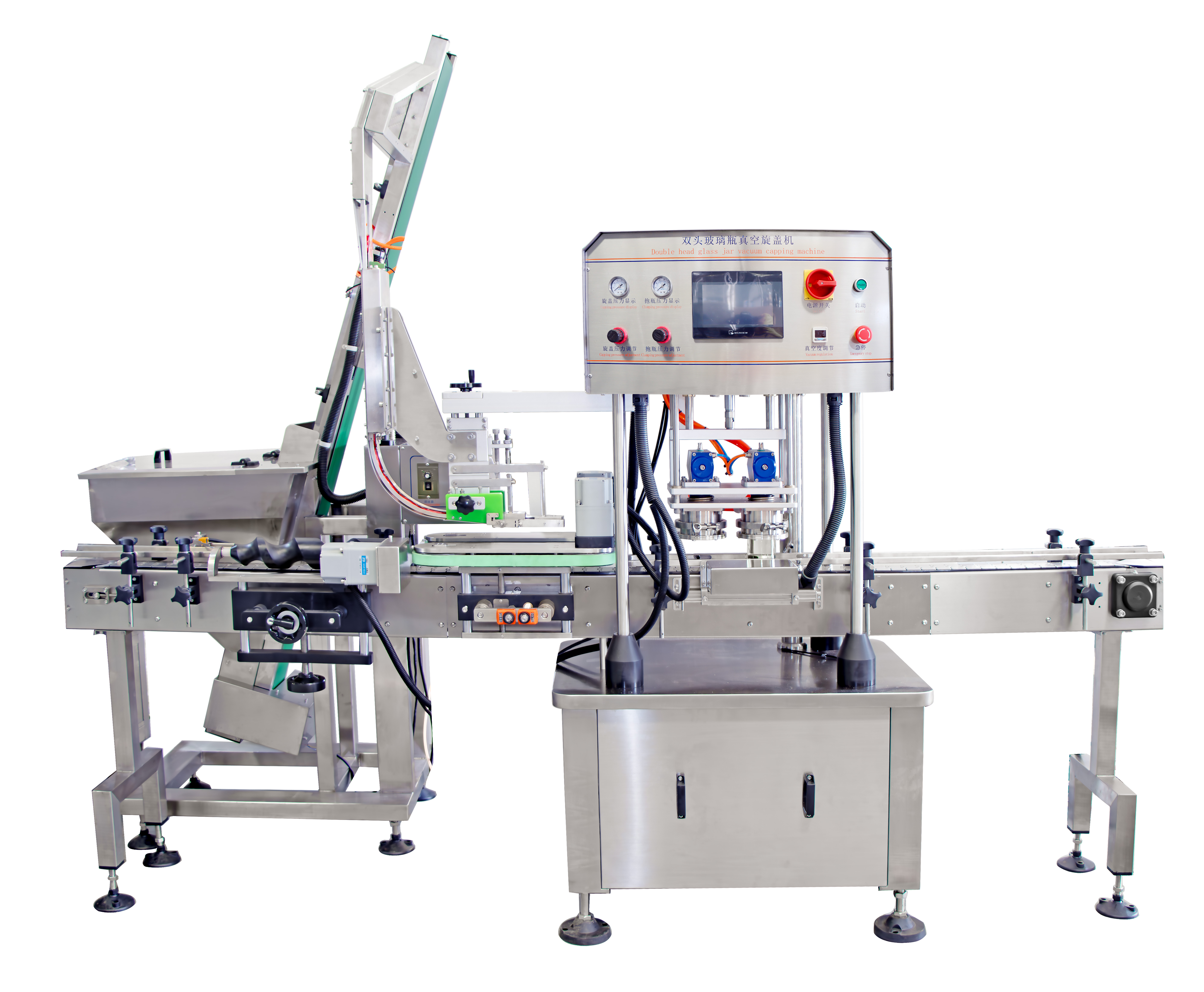
A vacuum-capped jar can lose its vacuum when air enters through an incomplete seal, damaged lid, unsuitable jar or cap combination, incorrect capping conditions, or changes in the product and packaging environment. In food packaging, maintaining a stable vacuum depends on the condition of the glass jar, lug cap or twist-off lid, sealing surface, vacuum level, and consistency of the capping process.
A vacuum capper helps reduce these problems by coordinating vacuum extraction, cap positioning, and lid tightening in a controlled automatic process. The Double Head Linear Vacuum Capping Machine is designed for glass jars with lug caps and twist-off lids, with a capping speed of approximately 25–30 containers per minute, a container diameter range of 35–110 mm, and a container height range of 50–180 mm.
What Causes a Vacuum-Capped Jar to Lose Its Vacuum?
One common cause is an incomplete or inconsistent lid seal. If the lug cap is not correctly positioned on the jar neck, the sealing compound may not contact the glass surface evenly. Small gaps can allow air to enter the container over time. Damaged caps, defective sealing surfaces, incorrect lid specifications, or damaged jar rims can also prevent the closure from forming a reliable seal.
Another factor is incorrect vacuum capping conditions. If insufficient air is removed before the lid is tightened, the final vacuum may be lower than required. On the other hand, simply increasing the tightening force does not necessarily solve a vacuum problem. The vacuum extraction process, cap positioning, lid condition, jar geometry, and tightening operation must work together to create a consistent closure.
Product and process conditions can also affect vacuum stability. Filling temperature, product characteristics, headspace, jar design, and the relationship between the product and closure system can influence the final vacuum inside the container. For this reason, manufacturers should evaluate the complete packaging process rather than treating the vacuum capper as an isolated machine.
How Can Incorrect Cap Positioning Cause Vacuum Loss?
A lug cap or twist-off lid must be positioned correctly on the jar before the sealing operation. If the lid is tilted, shifted, or incorrectly aligned with the jar threads and lugs, the sealing surface may not close evenly. This can create a potential path for air to enter after the jar leaves the capping machine.
The Double Head Linear Vacuum Capping Machine uses an automatic cap feeding system to provide a continuous supply of lug caps and coordinates cap handling with the vacuum capping process. Stable cap feeding helps reduce manual cap placement and supports more consistent lid positioning during continuous production.
How Does a Vacuum Capping Machine Help Maintain Stable Jar Sealing?
A vacuum capping machine performs vacuum extraction and lid sealing as part of an automated packaging process. The jar is positioned at the capping station, the lug cap is supplied and placed onto the container, and the vacuum capping head performs the required sealing operation. Automatic control helps keep the process consistent from jar to jar.
The Double Head Linear Vacuum Capping Machine uses two vacuum capping heads, allowing two jars to be processed simultaneously. Its intelligent automatic control system manages vacuum extraction, cap tightening, and production operation. With a rated speed of approximately 25–30 containers per minute, the double-head configuration is designed for food manufacturers requiring higher efficiency without relying entirely on manual vacuum capping.
Guangzhou Full Harvest Industries Co., Ltd. is a packaging machinery manufacturer providing equipment for food and industrial packaging applications. Its vacuum capping solutions are designed around practical production requirements such as automatic cap feeding, controlled vacuum extraction, lid sealing, and continuous jar handling. The Double Head Linear Vacuum Capping Machine provides a solution for manufacturers packaging food products in glass jars with compatible lug caps and twist-off lids.
What Should Manufacturers Check When a Jar Loses Vacuum?
When vacuum loss occurs, manufacturers should first inspect the jar rim, lid condition, sealing compound, cap positioning, vacuum conditions, and capping process. The compatibility between the glass jar and lug cap is especially important because even a properly adjusted machine cannot compensate for a damaged jar rim or unsuitable closure.
Manufacturers should also check whether the machine is correctly configured for the actual jar diameter, jar height, lid specification, and production requirements. The Double Head Linear Vacuum Capping Machine supports containers approximately 35–110 mm in diameter and 50–180 mm in height, but the final capping configuration should be verified using the customer's actual jars and lids.
A suitable production process can be organized as food filling → jar preparation → lug cap feeding → cap positioning → vacuum extraction → vacuum lid sealing → inspection → labeling → final packaging. Monitoring the closure quality after capping can help manufacturers identify whether vacuum loss originates from the jar, lid, product process, or capping operation.
How Does a Double Head Vacuum Capper Improve Production Consistency?
The double-head configuration allows two jars to undergo vacuum capping within the same operating cycle, increasing production efficiency compared with a single-head configuration. Automatic cap feeding reduces manual handling, while intelligent control coordinates the vacuum extraction and sealing process.
The machine also provides wide application flexibility for different compatible glass jar sizes and lid specifications. When changing packaging formats, the vacuum capping heads and related machine settings need to be adjusted according to the actual jar and closure. Correct setup is important for maintaining stable vacuum sealing across different production runs.
For food manufacturers experiencing vacuum loss, the objective is therefore not simply to increase capping pressure or machine speed. A reliable vacuum closure requires the right jar, compatible lug cap, suitable vacuum conditions, correct cap positioning, and controlled sealing operation. An automatic vacuum twist capper provides the equipment framework for coordinating these factors during continuous production.